Virtual Clinic or Exam Room? A Clinical Framework for Choosing Your Hair Loss Care Setting
A decade ago, obtaining a finasteride prescription required a scheduled appointment, a waiting room, and a face-to-face conversation with a dermatologist or primary care physician. Today, a man can complete a digital intake form, upload a few photographs, and receive a prescription within 24 hours—sometimes without speaking to a clinician at all. Telehealth platforms have fundamentally altered the access equation for hair loss treatment, and for many patients, that shift has been genuinely beneficial.
But accessibility and clinical appropriateness are not the same thing. The question patients should be asking is not simply whether telemedicine is convenient, but whether it is the right setting for their particular clinical situation. The answer, as it turns out, is not uniform.
How Each Model Works
Understanding the structural differences between telemedicine and in-person care is the starting point for any meaningful comparison.
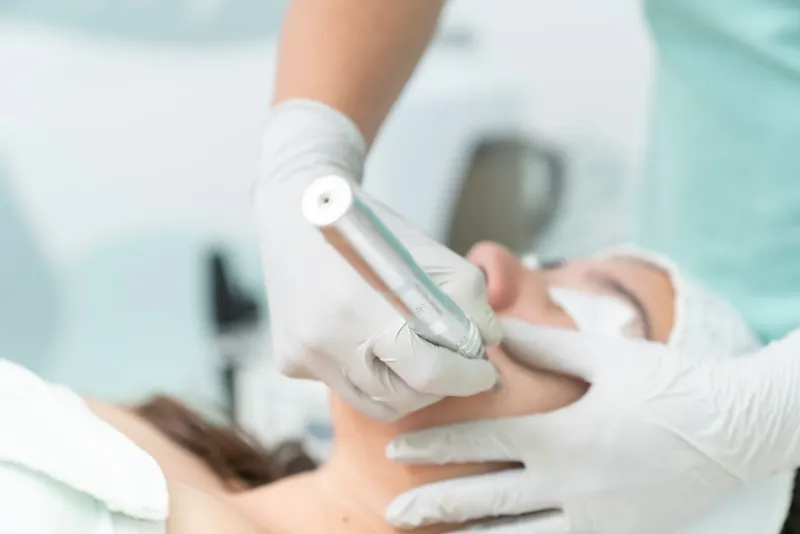
In a traditional in-person dermatology visit, a board-certified dermatologist physically examines your scalp, assesses hair density and distribution patterns, and may use specialized tools—such as a dermatoscope—to evaluate follicular health at a level of detail that photography cannot reliably replicate. The physician can palpate the scalp, assess scalp condition, and observe subtle clinical signs that inform both diagnosis and treatment planning.
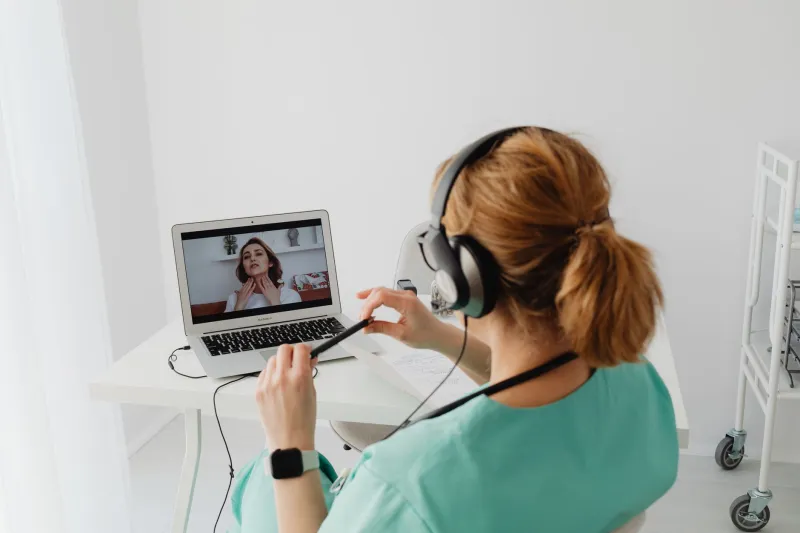
Telemedicine platforms for hair loss typically operate through one of two models. The first is asynchronous, or "store-and-forward," care: patients complete a questionnaire and submit photographs, which a clinician reviews and responds to at a later time. The second is synchronous video consultation, where patients interact with a provider in real time. Some platforms combine both approaches. In either case, the clinician is working from patient-reported information and images rather than direct physical examination.
Where Telemedicine Performs Well
For patients with a straightforward presentation of androgenetic alopecia—the classic, genetically mediated pattern of hair loss that accounts for the vast majority of male hair loss cases—telemedicine can be a clinically appropriate and highly practical option.
The advantages are real. Geographic access is perhaps the most significant: dermatologists are unevenly distributed across the United States, with significant shortages in rural and underserved areas. For a patient in a region with limited specialist availability, a telehealth platform may represent the most realistic pathway to evidence-based treatment. Similarly, patients who face scheduling barriers, have limited flexibility for weekday appointments, or experience anxiety about in-person medical settings may find that telemedicine removes friction that would otherwise delay care.
For straightforward androgenetic alopecia managed with finasteride—a well-established, FDA-approved medication with a clear dosing protocol—the clinical complexity of the initial evaluation is often manageable within a telehealth framework, particularly when the prescribing clinician is experienced in hair loss assessment. Follow-up consultations, which typically involve monitoring treatment response and discussing any emerging concerns, are also well-suited to virtual formats.
Where In-Person Care Holds a Distinct Advantage
The limitations of telemedicine become clinically relevant in several important scenarios.
First, diagnostic uncertainty. Hair loss is not always androgenetic alopecia. Conditions including alopecia areata, telogen effluvium, tinea capitis, lichen planopilaris, and frontal fibrosing alopecia can produce hair loss patterns that superficially resemble androgenetic alopecia but require entirely different treatment approaches. Some of these conditions are inflammatory, autoimmune, or infectious in origin, and misidentifying them as pattern baldness—and prescribing finasteride accordingly—delays appropriate care while providing no benefit.
A dermatologist conducting an in-person examination with a dermatoscope can identify follicular inflammation, fibrosis, pustules, or other scalp changes that photographs may not adequately capture. For patients with atypical presentations, rapid or patchy loss, scalp symptoms such as itching or burning, or a clinical history that does not neatly fit the androgenetic pattern, in-person evaluation is not merely preferable—it is clinically necessary.
Second, laboratory assessment. Certain causes of hair loss—thyroid dysfunction, iron deficiency, hormonal imbalances—are systemic in origin and require blood work to identify. In-person care settings are better equipped to integrate this diagnostic layer into the evaluation process. Some telehealth platforms do offer lab ordering, but the workflow is less seamless, and the interpretation of results in the context of a physical examination is more robust when conducted in person.
Third, scalp health monitoring. Long-term finasteride management benefits from periodic physical assessment of scalp condition and hair density. While patient-reported outcomes and photographic documentation can support telemedicine follow-up, the precision of in-person evaluation provides a more reliable baseline for tracking treatment response over time.
Quality Control and Prescription Legitimacy
Not all telehealth platforms operate to the same clinical standard, and patients should approach this market with appropriate discernment.
Legitimate telemedicine services employ licensed physicians or nurse practitioners, conduct individualized clinical assessments rather than rubber-stamping questionnaire responses, and operate within state licensing frameworks. Prescriptions issued through these platforms are legally valid and filled through licensed pharmacies.
By contrast, some online services function closer to direct-to-consumer retail operations, with minimal clinical oversight and limited capacity for individualized assessment. Patients should verify that any telehealth provider they use employs licensed clinicians, maintains a clear process for clinical review, and has mechanisms in place for follow-up and adverse event reporting. The presence of a medical advisory board, state-specific licensing disclosures, and transparent prescribing policies are reasonable indicators of a platform operating within appropriate professional standards.
A Decision Framework for Patients
Rather than framing this as a binary choice, it is more useful to think of telemedicine and in-person care as complementary options suited to different clinical circumstances.
Telemedicine is likely appropriate when: the hair loss pattern is consistent with classic androgenetic alopecia, the patient has no scalp symptoms or atypical features, access to in-person dermatology is limited, and the patient is seeking to initiate or continue a well-established pharmacological regimen.
In-person evaluation is strongly advisable when: the pattern of hair loss is atypical, sudden, or patchy; scalp symptoms are present; previous treatments have failed without clear explanation; the patient has not been previously evaluated by a dermatologist; or systemic causes of hair loss have not been ruled out.
For many patients, the optimal pathway involves an initial in-person evaluation to establish an accurate diagnosis, followed by telemedicine-supported follow-up for ongoing management. This hybrid approach preserves the diagnostic rigor of in-person care while capturing the convenience benefits of virtual access.
The Bottom Line
Telemedicine has meaningfully expanded access to hair loss treatment for American men, and for the right patient in the right clinical situation, it represents a legitimate and effective care pathway. But it is not a universal substitute for in-person dermatological evaluation. The appropriate setting for your care depends on the specifics of your clinical presentation—and when in doubt, a face-to-face evaluation with a qualified dermatologist remains the most comprehensive starting point.