Undertrained and Underprepared: How Medical Education Is Failing Hair Loss Patients Before They Ever Walk Into a Clinic

Consider the scale of the problem. Androgenetic alopecia—the most common form of hair loss in the United States—affects approximately 50 million men and 30 million women across the country. It is a progressive condition with a well-characterized biological mechanism, a validated genetic basis, and multiple FDA-approved treatment options. By nearly every measure, it qualifies as a significant public health concern.
And yet, ask most primary care physicians how many hours of formal training they received on the diagnosis and management of androgenetic alopecia during medical school, and the answer is likely to be: very few, if any.
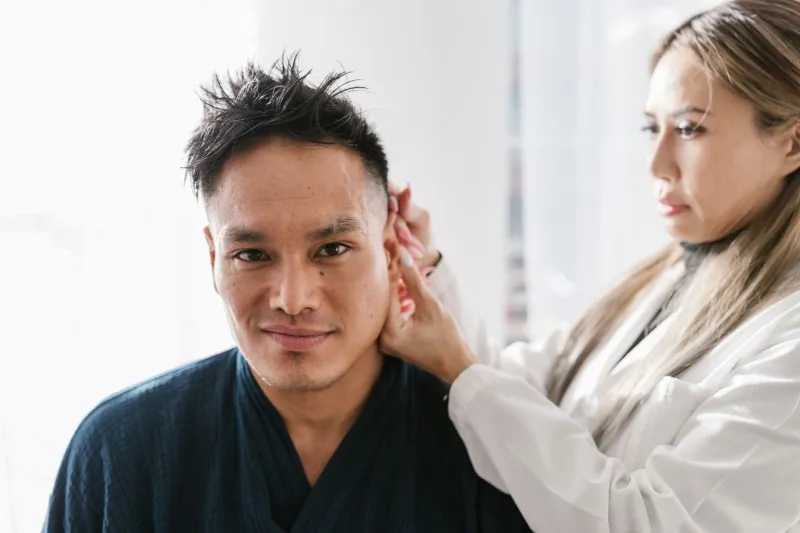
This is not a peripheral problem. The physician a patient sees most often—their family doctor, internist, or general practitioner—is typically the first clinician to notice signs of hair loss during a routine examination. If that physician lacks the training to recognize early androgenetic alopecia, initiate a basic clinical conversation, or make a timely referral, the patient loses access to a critical intervention point. Given that hair loss treatment is most effective when initiated early, this educational gap has direct consequences for patient outcomes.
What Medical School Teaches—and What It Doesn't
U.S. medical education operates on a structured curriculum that must cover an enormous breadth of clinical knowledge within a compressed timeframe. The preclinical years introduce foundational science; the clinical years expose students to core rotations in internal medicine, surgery, pediatrics, obstetrics, and psychiatry, among others. Dermatology, as a specialty, typically receives a relatively brief rotation—often two to four weeks—and within that limited window, the curriculum must address a vast range of dermatological conditions.
Hair and scalp disorders, including androgenetic alopecia, compete for attention alongside skin cancer, psoriasis, eczema, infectious dermatoses, and dozens of other conditions. In practice, many medical students complete their dermatology rotation with minimal exposure to hair loss diagnosis and management. Androgenetic alopecia may be mentioned in the context of pattern recognition, but the nuances of clinical assessment—differentiating androgenetic alopecia from telogen effluvium, alopecia areata, or scarring alopecias—are rarely covered in depth.
The result is a physician workforce in which dermatologists possess specialized competency in hair loss management, but the far larger population of primary care physicians does not. This creates a structural bottleneck: patients must reach a dermatologist to receive appropriate care, but the clinician most likely to see them first—and most likely to identify early hair loss—is not equipped to facilitate that pathway effectively.
The Specialty Silo Problem
Medical specialization has produced extraordinary advances in clinical care, but it has also created silos that impede the management of conditions that cross specialty lines. Hair loss is a useful illustration of this dynamic.
Androgenetic alopecia has endocrine dimensions—it is driven by the conversion of testosterone to dihydrotestosterone (DHT) via the enzyme 5-alpha reductase. It has genetic dimensions, with polygenic inheritance patterns that researchers continue to characterize. It has psychological dimensions, with documented associations with depression, anxiety, and reduced quality of life. And it has dermatological dimensions, involving follicular biology and scalp health.
Despite this multidimensional profile, hair loss is categorized primarily as a dermatological concern in most clinical and educational frameworks. This categorization means that endocrinologists, internists, and psychiatrists—who might each encounter the condition from a different clinical angle—are not systematically trained to engage with it. Primary care physicians, who sit at the intersection of all these specialties, receive training that is insufficient for any of these dimensions.
The silo problem also shapes how continuing medical education (CME) is structured. Physicians who wish to expand their knowledge of hair loss management after completing training must seek out specialty-specific CME that may not be readily accessible or prioritized within their practice context.
Misdiagnosis and Missed Opportunities
The practical consequences of inadequate physician training manifest in two primary ways: misdiagnosis and missed intervention opportunities.
Misdiagnosis occurs when a physician encounters hair loss that does not match the textbook image of androgenetic alopecia—or when a different form of alopecia is incorrectly identified as androgenetic. Diffuse thinning in a female patient may be attributed to stress or nutritional deficiency without a structured differential diagnosis that considers androgenetic alopecia, thyroid dysfunction, or other etiologies. Patchy hair loss may be dismissed without considering alopecia areata, a condition requiring distinct management. A patient with frontal fibrosing alopecia—a scarring condition—may be reassured that their hairline recession is normal when, in fact, the window for meaningful intervention is closing.
Missed intervention opportunities are equally common and perhaps more insidious. A physician who does not recognize early androgenetic alopecia during a routine visit simply does not initiate the conversation. The patient, unaware that their hair loss is already clinically significant, leaves without a referral or a treatment discussion. This pattern repeats across visits until the hair loss has advanced to a stage where treatment is less effective—at which point the physician may finally acknowledge the condition, but the optimal intervention window has passed.
The Patient Demand That Medicine Isn't Meeting
The disconnect between patient need and physician preparedness is not invisible to the healthcare system—it is reflected in the rapid growth of direct-to-consumer telehealth platforms that have filled the gap left by traditional medical practice. Millions of American men have turned to online prescription services for finasteride because their primary care physicians either did not raise the topic or did not feel equipped to manage it.
This market response speaks to a genuine unmet need, but it also creates its own clinical risks. Patients who bypass the traditional care pathway may not receive the diagnostic evaluation necessary to rule out non-androgenetic causes of hair loss before initiating treatment. The educational gap in medicine has, in part, created the conditions for a less clinically rigorous alternative to flourish.
Toward a More Prepared Physician Workforce
Addressing this gap requires intervention at multiple levels of medical education and professional development.
At the medical school level, integrating structured hair loss content into dermatology rotations—and into primary care curricula specifically—would equip future physicians with the foundational competency to recognize androgenetic alopecia, conduct a basic differential assessment, and make appropriate referrals. This does not require extensive curriculum expansion; targeted, well-designed educational modules can convey the essential clinical knowledge efficiently.
At the residency level, family medicine and internal medicine programs have an opportunity to incorporate hair loss assessment into their training frameworks, particularly given the frequency with which primary care physicians encounter the condition in practice.
At the continuing education level, professional medical associations can prioritize hair loss content in CME offerings for practicing physicians, reducing the knowledge gap among clinicians who completed training before this issue received greater clinical attention.
Finally, clinical guidelines from organizations such as the American Academy of Dermatology can be more actively disseminated to primary care settings, providing practicing physicians with accessible, evidence-based frameworks for managing hair loss in routine clinical encounters.
What Patients Can Do in the Meantime
For patients navigating this landscape today, the educational gap in medicine is a real but not insurmountable obstacle. Seeking care from a board-certified dermatologist—rather than relying solely on a general practitioner—provides access to a clinician with the specialized training necessary for accurate diagnosis and appropriate treatment planning. Coming to appointments prepared with documentation of hair loss progression, a family history of androgenetic alopecia, and specific questions about treatment options can also help facilitate a more productive clinical conversation.
The systemic problem of inadequate physician training will take time to address. In the interim, informed patients who advocate for early evaluation and specialist referral are best positioned to access the care that the evidence supports.